


Tyre pressure
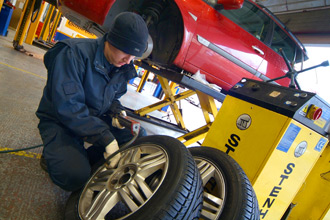 Correct
tyre pressure can help to extend the life of your tyre, improve
vehicle safety and maintain fuel efficiency. Pressure is measured by
calculating the amount of air that has been pumped into the inner
lining of your tyre in pounds force(PSI) or BAR pressure.
Correct
tyre pressure can help to extend the life of your tyre, improve
vehicle safety and maintain fuel efficiency. Pressure is measured by
calculating the amount of air that has been pumped into the inner
lining of your tyre in pounds force(PSI) or BAR pressure.
The manufacturer of your vehicle specifies the suitable pressure, and it is your responsibility to make sure that the pressure is checked and corrected on a regular basis, at least every couple of weeks.
Maintaining correct Tyre Pressures
There are three main reasons why maintaining the right tyre pressure is important. The first is safety. Tyres that are under inflated can overheat; and over inflated tyres can lead to poor vehicle handling on the road. .
The second reason is economy. Over or under inflated tyres suffer more damage than those with the correct pressure and need to be replaced more regularly. Vehicles with under-inflated tyres have increased rolling resistance that require more fuel to maintain the same speed.
The third reason for maintaining the correct tyre pressure is the environment. Correct tyre pressures help to maintain optimum fuel efficiency. This can equate to lower Co2 emissions coming from your vehicle than those with incorrect tyre pressures and that has to be good for the environment.
To search for the recommended tyre pressure
for your vehicle please

To see an example of a correctly inflated tyre.

It's important to check tyre pressure regularly. It's not always apparent that air is being lost, but it generally escapes at the rate of up to two pounds of air every month. More air is usually lost during warm weather, so more regular checks are needed when temperatures rise.
Look for the tyre pressure recommended for your vehicle in your vehicle hand book or within the technical information usually found on the inside of your vehicle's front right hand door or fuel tank flap.
Always check the tyre pressure with a tyre pressure gauge when your tyres are cold. Finally, if you are using your vehicle to carry additional load or weight, always consult your vehicle handbook for the correct loaded tyre pressure.
Tyre Pressure Measurement Converter
| BAR | PSI | BAR | PSI | BAR | PSI | BAR | PSI | BAR | PSI |
| 1.30 bar | 17 psi | 1.90 bar | 27 psi | 2.60 bar | 37 psi | 3.25 bar | 47 psi | 3.95 bar | 57 psi |
| 1.35 bar | 18 psi | 1.95 bar | 28 psi | 2.65 bar | 38 psi | 3.30 bar | 48 psi | 4.00 bar | 58 psi |
| 1.40 bar | 19 psi | 2.00 bar | 29 psi | 2.70 bar | 39 psi | 3.40 bar | 49 psi | 4.10 bar | 59 psi |
| 1.45 bar | 20 psi | 2.10 bar | 30 psi | 2.75 bar | 40 psi | 3.50 bar | 50 psi | 4.15 bar | 60 psi |
| 1.50 bar | 21 psi | 2.15 bar | 31 psi | 2.80 bar | 41 psi | 3.55 bar | 51 psi | 4.50 bar | 65 psi |
| 1.55 bar | 22 psi | 2.20 bar | 32 psi | 2.90 bar | 42 psi | 3.60 bar | 52 psi | 4.80 bar | 70 psi |
| 1.60 bar | 23 psi | 2.25 bar | 33 psi | 3.00 bar | 43 psi | 3.70 bar | 53 psi | 5.20 bar | 75 psi |
| 1.70 bar | 24 psi | 2.30 bar | 34 psi | 3.05 bar | 44 psi | 3.75 bar | 54 psi | 5.50 bar | 80 psi |
| 1.75 bar | 25 psi | 2.40 bar | 35 psi | 3.10 bar | 45 psi | 3.80 bar | 55 psi | 5.85 bar | 85 psi |
| 1.80 bar | 26 psi | 2.50 bar | 36 psi | 3.20 bar | 46 psi | 3.90 bar | 56 psi | 6.20 bar | 90 psi |
You can convert a bar pressure measurement into a psi pressure measurement using our tyre pressure converter.